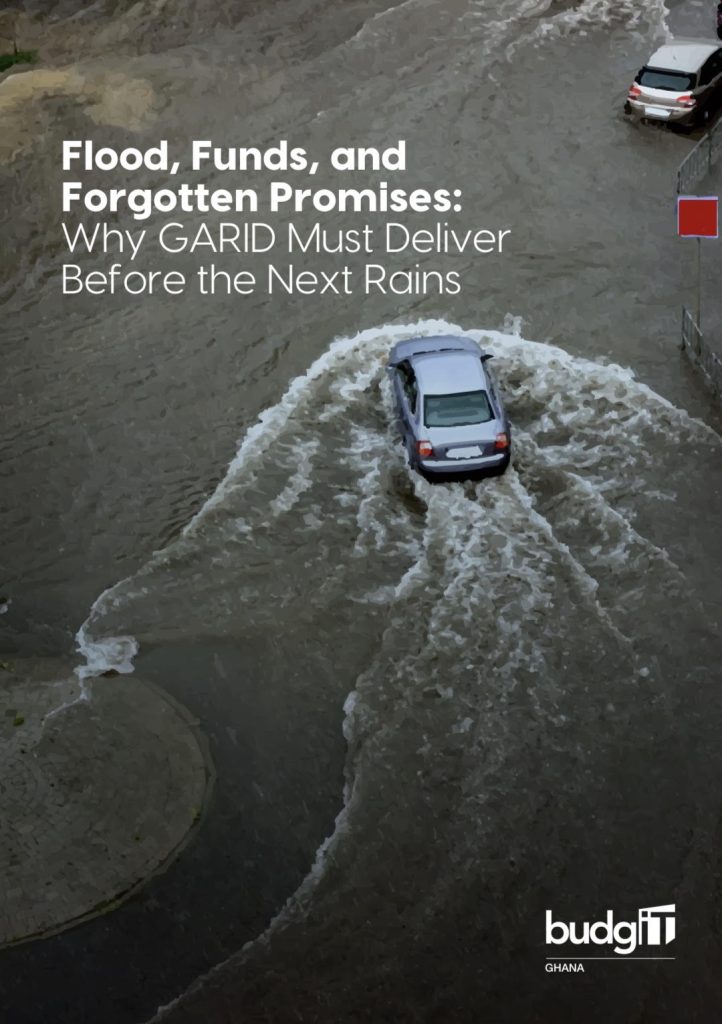
Flood, Funds, and Forgotten Promises: Why GARID Must Deliver Before the Next Rains
The Greater Accra Resilient and Integrated Development (GARID) project is the biggest urban resilience program in Ghana so far, with a US$350 million World Bank facility approved in 2019, with the aim of reducing the frequency of floods in the Odaw River basin, a disaster that devastates the lives of the poorest residents of Accra every single year without fail. Seven years into the implementation of the program, the following question requires an answer. Did the money achieve the purpose for which it was borrowed?
The evidence speaks to the contrary. As at June 2025, when only one year remained out of seven planned for the programme, only US$127.1 million (approximately 36%) of the total facility had been disbursed. These funds that were dispensed also tell a story, as IMANI Africa’s audit of the GARID transaction ledger indicates that an amount of GH¢592.34 million was committed and GH¢551.57 million was released as at mid-202, but up until now, the GARID programme has been more of planning than construction, with consultancy services, engineering, design and feasibility studies eating up the early years of the programme, even as the rains kept falling on schedule every June.