
Howard Zinn once said, “We don’t have to engage in grand, heroic actions to participate in the process of change. Small acts, when multiplied by millions of people, can transform the world.” Every generation is told that young people are the future. It is one of the most repeated phrases in public and even everyday conversations – well-intentioned but actually incomplete. In today’s fast evolving world and especially for Ghana, that future is arriving faster than we think. With nearly 57% of Ghana’s population under the age of 25, young people remain Ghana’s most untapped natural resource, and this demographic in recent years, has proven that it is no longer waiting in the wings for some ideal future, but rather are already shaping conversations, questioning institutions, organising their communities and demanding a greater stake in how the country is governed, as evidenced in movements like #FixTheCountry, #FreeTheYouth, the Ghana Youth Federation and so many more. The challenge therefore, is no longer whether young people are interested in governance or not, but whether we are creating enough opportunities for that interest to translate into meaningful civic action.
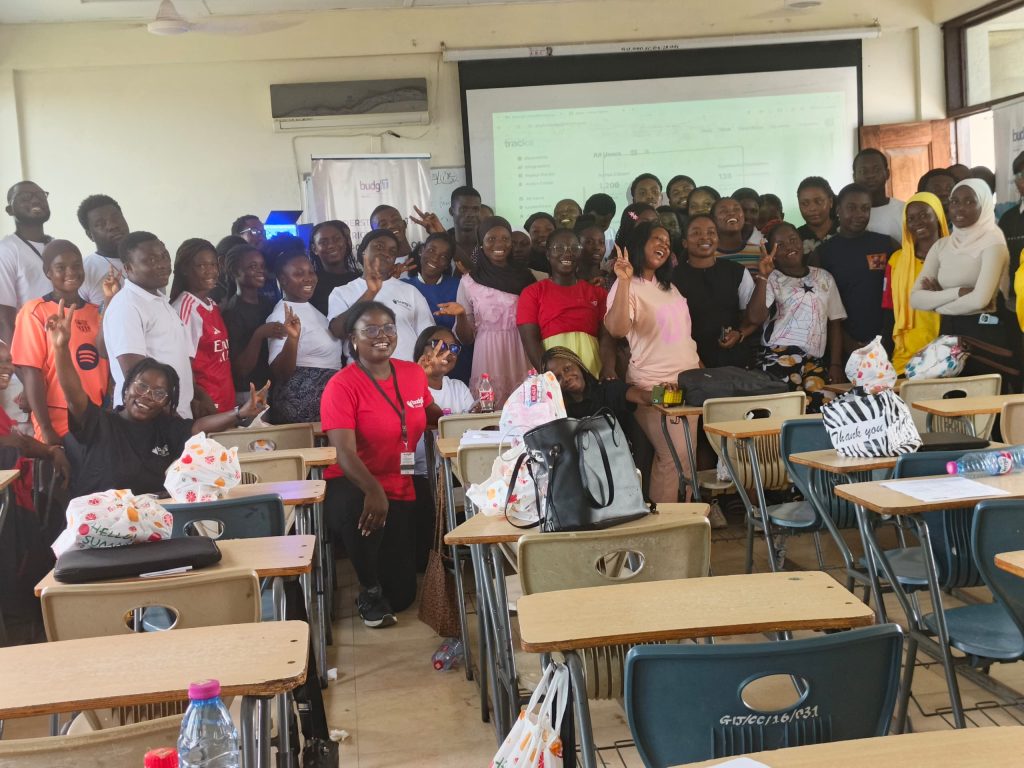
At BudgIT Ghana, we believe democracy is strongest when citizens participate long before election day and long before they assume positions of leadership. Active citizenship begins not in Parliament or public office but in classrooms, lecture halls, trotros and taxis, communities, and everyday conversations where people realise that governance is not something happening around them, but something they have both the right and responsibility to shape. Walk into any university campus in Ghana and you will hear conversations about everything – football, music, exams, relationships, politics, the economy, and what the future might hold after graduation. What you may not always notice is something equally important happening beneath those conversations: a growing curiosity about Ghana’s fate in the next five to ten years, especially in the age of AI and technology. It is this observation that has informed our youth initiative, the Youth Participatory Forum, and which also brought us to the University of Media, Arts & Communication (UNIMAC), on Wednesday, June 24, 2026 for two complementary activities; the Tracka Campus Storm and the Formation of the Youth Participatory Forum (YPF) UNIMAC Chapter, both united under the theme, “Empowering Young People to Build a Just and Equitable Future through Active Citizenship.”
What Does a Tracka Campus Storm Look Like?
The day began with the Tracka Campus Storm – one of our signature campus outreach activities designed to take civic engagement out of formal rooms and into the everyday spaces where young people learn, live and exchange ideas. While a campus storm typically refers to a volunteer-led mobilisation campaign, under our Tracka initiative, it is much more than that. It is a deliberate effort to meet young people where they are, spark meaningful conversations on accountability, and demonstrate that active citizenship is not confined to election seasons or policy discussions, but is woven into everyday life. With a team of about 20 enthusiastic student volunteers, we transformed the UNIMAC campus into one giant civic conversation. Following a briefing session, volunteers paraphernalia and organised into smaller teams to maximise outreach across lecture halls, hostels, parking lots, canteens, and surrounding locales in the campus community. We did far more than distribute posters and materials, but engaged students in insightful conversations, introduced the Tracka app, and demonstrated how ordinary citizens could monitor public projects, ask informed questions and advance the development of their communities.
What Does Active Citizenship Among Young People Look Like in Practice?
One of the most defining moments of the storm unfolded in a lecture theatre where nearly one hundred students transformed what could have been a routine presentation into a robust and healthy exchange of views. Their questions were thoughtful, probing and refreshingly direct and poignant. They sought to understand BudgIT Ghana’s independence, asking whether the organisation was affiliated with any political party, who funded its work, and whether its partners and sponsors influenced its agenda and delivery. Others questioned how Tracka protects citizen information and whether the government collaborates with the initiative, how reports submitted through the app were verified and whether Tracka had demonstrated tangible impact since its inception. It was absolutely brilliant to see firsthand the quality of inquiry demonstrated by these young people reflecting precisely the kind of curiosity, critical thinking and healthy skepticism that active citizenship demands. By the end of the campus storm, hundreds of students and community members had been directly engaged, expressing keen interest in BudgIT Ghana’s work, the Tracka platform and our youth network.
The Youth Participatory Forum Arrives at UNIMAC
The momentum generated by the Campus Storm naturally flowed into an equally significant milestone – the formation of the Youth Participatory Forum (YPF) UNIMAC Chapter. Bringing together students from diverse academic backgrounds but united by a shared commitment to accountability, transparency and active citizenship, the engagement created for a space for young people to understand governance as a shared national responsibility and a platform to join a carefully curated community focused on youth empowerment, capacity building, career support, advocacy and leadership development. Through a series of carefully designed discussions, open fora, an interactive tech-based civic icebreaker, and practical sessions facilitated by the team, participants were challenged to rethink their place in Ghana’s governance and development ecosystem and make a commitment to ask the necessary and hard questions, get informed and advance the development of their communities and Ghana as a whole.
The trajectory, success stories and experiences of the Youth participatory Forum were shared as a growing national movement across university campuses and beyond. The highlight of the day’s engagement was undoubtedly the formation of the Youth Participatory Forum (YPF) UNIMAC Chapter – a milestone that transformed the day’s conversations into a lasting commitment. Forty students officially joined the Forum as active members, while a newly constituted six-member executive committee was entrusted with leading the chapter and advancing its mission on campus. In heartfelt acceptance statements, each executive pledged to build a vibrant and inclusive community of young people committed to transparency, accountability, and democratic participation, signalling not the end of the day’s activities, but the beginning of a new chapter of civic engagement at UNIMAC.
More than the establishment of another campus chapter, this milestone represents the growth of a vibrant community of young people determined to transform their curiosity into action and ensure that the conversation on accountability becomes the preserve of Ghana’s largest demographic, after all, “The youth of a nation are the trustees of posterity.” – Benjamin Disraeli.