
FOR IMMEDIATE RELEASE
CSOs Demand Full Transparency on Ghana’s GH¢30 Billion Big Push Infrastructure Programme
Three civil society organisations — BudgIT Ghana, ISODEC and Revenue Mobilisation Africa (RMA) — are calling on the Government of Ghana to publish full project-level disclosures on the GH¢30 billion Big Push Infrastructure Programme, including project allocations, contract awards, procurement methods, implementation timelines, financing sources, and progress updates.
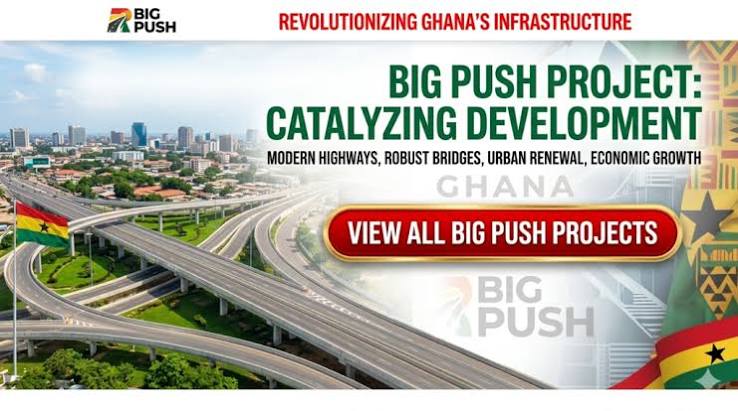
These organisations are collectively dedicated to fiscal transparency, public accountability, and inclusive governance in Ghana and they call for greater transparency around the Big Push Infrastructure Programme outlined in the 2026 National Budget. This initiative ranks among the most ambitious capital expenditure efforts in Ghana’s recent fiscal history and has attracted significant public interest and scrutiny. The government has made an infrastructure commitment of GH¢30 billion, which is intended to support growth, productivity, and employment generation through investments in road development, the construction of bridges, ports, and logistics corridors. The policy document further states that this infrastructure project was chosen considering economic viability, regional fairness, and alignment with 24-Hour Economy programme.
The budget also reveals that Parliament approved multi-year commitments to implement 33 road projects under the Big Push programme, and it is envisaged that the majority of these roads will be completed by mid-2027. Also, Government has listed the Accra-Kumasi Expressway and the Ekye Amanfrom-Adawso Bridge as transformational projects within the Big Push Agenda.
Furthermore, the public information on the website of the Ministry of Roads & Highways indicates that the contracts for the construction projects were awarded in 2025 and work has begun on 50 projects spanning 1,144 km, while 77 road projects are being executed; among them, 54 are new awards under the ‘Big Push’ programme, while 23 are ongoing construction projects. A list of the projects published on the Ministry of Roads & Highways provides information on several projects, including the region, implementing agency, project description, length, contract sum, contractor, and award date.
While the big push infrastructure is a promising program with high potential for citizens and businesses, there is a huge risk of funds being misappropriated without transparency. Citizens have a right to know how their taxes are being utilised, but this information is currently unavailable.
Jennifer A. Moffatt, Country Director of BudgIT Ghana, stated, “The Big Push Programme does have the potential for real development in Ghana, but transparency cannot be replaced with promises. Citizens are entitled to know what has been approved, how much is going to each project, and what the timelines are; otherwise, there is no accountability and no way for citizens to know that public funds are being spent as intended.”
Our Specific Concerns
Despite the scale of the Big Push Programme and its centrality in the 2026 Budget, there are key questions that remain unanswered.
- Lack of an outlined framework that provides a comprehensive list of all the public projects under the Big Push Programme. The government can build public trust and drive local development, trust and ownership by disclosing all pertinent information, including project title, allocation and location by sector. financing sources, procurement methods, implementation milestones, and expected completion dates. While some road contract information is public, there is still limited consolidated disclosure on how projects were prioritised, how contractors were selected, the specific procurement methods used in each case, the status of contract execution, and how the full programme envelope will be financed and monitored over time.
- There is a lack of transparency and accountability in the implementation of the Big Push Agenda. Given the history of poor execution of capital expenditures in the country, a programme of such significance requires a matching level of transparency. Beyond citing the big numbers and publishing a few projects, citizens demands accountability around this project and this entails having a clear record of public commitments, from approval of the budget to procurement, through implementation, to completion, and value for money.
- Finally, without clear project timelines (start and completion dates), the public has no basis for knowing when benefits are expected or for identifying delays as they occur. That notwithstanding, a substantial amount of oil funds from the Annual Budget Funding Amount (ABFA) and other extractive sector funds have been projected to be diverted into the big push agenda. The policy change, priority, and the case for the new approach require explicit communication and transparency in this process.
Our Calls to the Government
In response to the foregoing, BudgIT Ghana, ISODEC, RMA, and IFS collectively call on the Government of Ghana to take the following urgent actions:
- Publish a consolidated and regularly updated Big Push disclosure portal or public register covering all projects under the programme, not only selected road projects, with details on sector, location, scope, implementing agency, approved budget, financing source, contractor, procurement method, award date, start date, expected completion date, and current status.
- Publish project-specific data on budgets and finance that make it easy for the public to understand how resources are allocated for the programme and distributed across the projects and sectors, including allocations from the national budget, oil and gas revenues, mineral royalties, borrowing, and any public-private partnership mechanisms.
- Disclose more comprehensive procurement documentation for all Big Push initiatives, including the procurement process applied, tender notices where applicable evaluation results, contractors selected, contract amounts, and any variations that come after.
- Publish a comprehensive implementation framework for the programme showing milestones, delivery targets, responsible ministries and agencies, and a standard reporting format for tracking physical and financial progress.
- Ensure quarterly reporting to Parliament and the public on CAPEX execution rates under the Big Push, with open access to supporting financial and procurement documentation as required under the Public Financial Management Act (Act 921).
Our organisations reiterate that true fiscal transparency is both a democratic duty and a technical necessity. Ghanaians are entitled to information about the commitment, contracting, and use of their taxes and borrowed funds. “We are ready to work with government, Parliament, and development partners to ensure that the Big Push Programme delivers real, verifiable, and equitable development outcomes for Ghanaians.”
Signed
Jennifer Addochoe Moffatt
Country Director, BudgIT Ghana
Sam Danse
Executive Director (Integrated Social Development Centre)
Geoffrey Kabutey Ocansey
Executive Director, Revenue Mobilisation Africa (RMA)