
“The Budget is not just an economic document, it is a moral document. It reflects what a nation values, who it prioritises and the future it chooses to build. – adapted from the public finance philosophy of Joseph Stiglitz. Every year, Ghana’s national budget arrives like clockwork, with familiar anticipation, questions and curiosity from citizens, and even the international community. There is the official presentation in Parliament, the big speeches and debates, the headline allocations, projections of growth and the inevitable public discourse that follows arguing whether it is a good budget, a holistic budget, a political budget or a placatory statement, depending on whichever side of the public sentiment you are on. Yet beyond the spectacle of Budget Day, lies a quieter and to be honest more serious question; how well do ordinary Ghanaians actually understand the policies, priorities and trade-offs shaping their everyday lives? If you were to go to the streets of say, Madina market or Legon campus or Haatso market or East Legon streets, you would be astounded as to how little the average Ghanaian knows about the most important economic statement of the year.
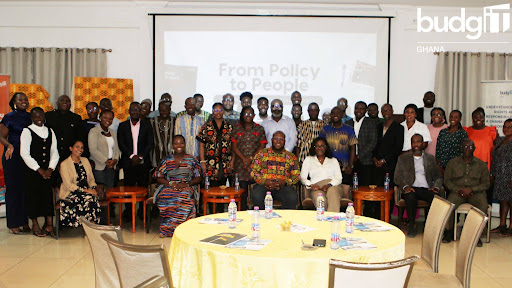
It is within this context that BudgIT Ghana hinges its mandate and the crux of its mission; the budget is everybody’s business and must work for everybody. Paramount to this core work is our most recent stakeholder gathering for the unveiling of our 2026 Budget Detailed Analysis & Citizens Budget documents, under the theme, “From Policy to People; Understanding Ghana’s 2026 Budget” at the Mensvic Grand Hotel in Accra. More than a ceremonial unveiling, the launch was in two-parts a stakeholder convening of government, civil society, the media, development partners, academia and citizens to present the most people-centered analysis on this year’s fiscal policy and also unpack the key social programs, big allocation bags and capital projects and their potential to deliver actual, tangible development outcomes for citizens, and the future of Ghana’s economy amidst economic gains and signs of stability.
Moving Beyond Budget Headlines
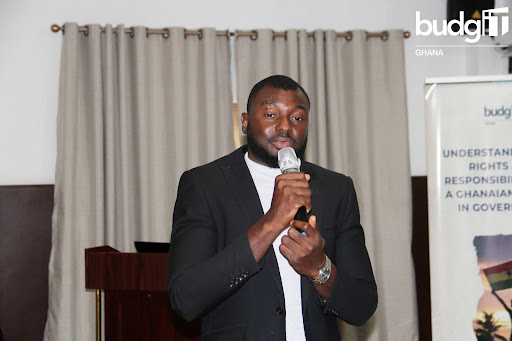
Opening the event, the Country Manager, Jennifer A. Moffatt, emphasised the importance of the launch as part of a broader commitment to making public finance more accessible, understandable and citizen-centered. She indicated, “We have always believed in the democratisation of public data for the advancement of equitable service delivery. This work is the product of rigorous research, validation and checks, people-centered analysis and we know that it is a crucial part of the Ghanaian public finance fabric.” In many ways her address set the tone for the entire engagement as it positioned this initiative as moving away from the usual trend of a one-way presentation of technical findings but as a participatory open dialogue on statement truly means beyond rhetoric.
Following this, the special highlight of the day was perhaps the presence of the International Growth Director of the BudgIT Foundation, as the guest speaker of the day. In her keynote address, she deepened the conversation by grounding it in lived realities and citizen experiences. She noted, “Our work on influencing the national budget must always connect back to lived realities – real people, real communities, real everyday experiences. And even with big capital projects, it cannot be just about ambition or scale on paper, but about whether that push actually reaches the ground where people live. The budget has to work for the people it is made for.”
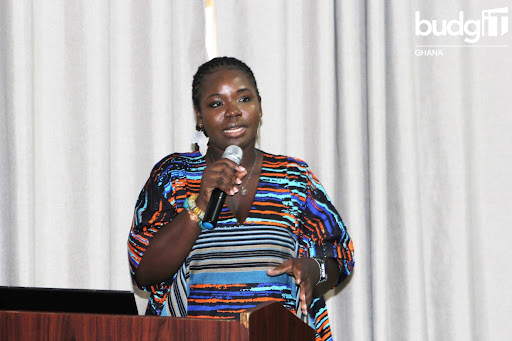
Hamid Abdel-Mumuni, BudgIT Ghana’s Senior Research Officer, shared a compelling set of insights on the government’s Big Push project, highlighting allocations, fiscal priorities and economic decisions shaping the face of public service delivery in 2026. Hamid’s session created a platform for interrogating the reality of delivering capital projects like the Big Push, Agenda 111 projects etc. and the assumptions underpinning these plans particularly at a time when the country has just officially exited the IMF Programme after successfully passing all reviews. Whilst the country’s exit from the IMF Bailout Programme is a significant economic milestone participants repeatedly returned to the question that has been on every Ghanaian’s mind since the win was announced; what comes next? More specifically, how does Ghana sustain fiscal discipline while simultaneously pursuing ambitious but much-needed development interventions for the Ghanaian people?
The Panel and the Big Push Deliverability Question
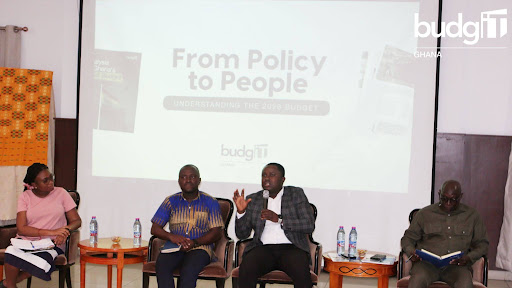
One of the most riveting parts of the day was the panel session on the feasibility of the Big Push project through a multi-sector lens, as a climax for Hamid’s presentation on the key figures and what citizens should know. Featuring industry experts in the persons of Dr. Angela A. Alu, Fiscal Policy Advisor of Oxfam in Ghana, Samuel Obeng, Executive Director of Parliamentary Network Africa, Dr. Alex Kombat, Assistant Commissioner, Research & Policy at the Ghana Revenue Authority, Mr. Moammed Mubeen Abubakar, Development Planner at the Ga-East Municipal Assembly and Mr. Geoffrey Kabutey Ocansey, Executive Director of Revenue Mobilisation Africa, the session interrogated the nitty-gritty of the Big Push and Ghana’s ability to deliver it efficiently and effectively without undermining investor confidence.
The conversation was not framed as an attack on the programme, rather panelists acknowledged the urgent need for infrastructure expansion. However the question still remained an issue of balance; the difficult trade-offs between expenditure, debt management since the debt stock still hovers around GH₵600 billion, revenue mobilisation and social protection.
Technology, AI and the Future of Accountability
Beyond fiscal policy discussions, we had the opportunity to hear from one of the finest minds in civic-centered artificial intelligence work and research, Mr. Kambale Musavuli, Managing Director of Aether Strategies, who explored the growing role of artificial intelligence in governance and public accountability systems. Rather than presenting AI as a futuristic distraction, his presentation focused on relevant questions like; Can AI strengthen transparency? Can it improve public access to information? Can it support more responsive service delivery? At the same time, he explored the concerns around ethics, data protection, and institutional preparedness to leverage this fast-growing sphere of technology.
Closely connected to this conversation was a session with our Head of Tracka, Evelyn Olukeye, our flagship accountability tool, Tracka and how it is enabling citizens to monitor public projects in their communities, report community needs and governance gaps, positioning them as stakeholders instead of recipients only. She shared some of the initiative’s impact stories from across the country and the work we are doing to ensure no community is left behind.
The Official Unveiling of our Work
We arrived at the most pivotal part of the programme – the official launch of the resources we had been working on in the past couple of months since Budget Day; our 2026 Budget Detailed Analysis & Citizens Budget. To do the honour, our International Growth Director, Ms. Abiola Afolabi, reflected on the journey leading up to this moment, “These documents are such an important part of our work. It is BudgIT Ghana’s contribution towards strengthening democracy. We want people to be able to engage with the budget, not just see or read the numbers but be able to make sense of them without the complexity that comes from government documents. You start awareness by understanding the budget, and then you demand government accountability and collectively drive real development in our communities. My team and I have been working on this for the last six months and we are finally here today.
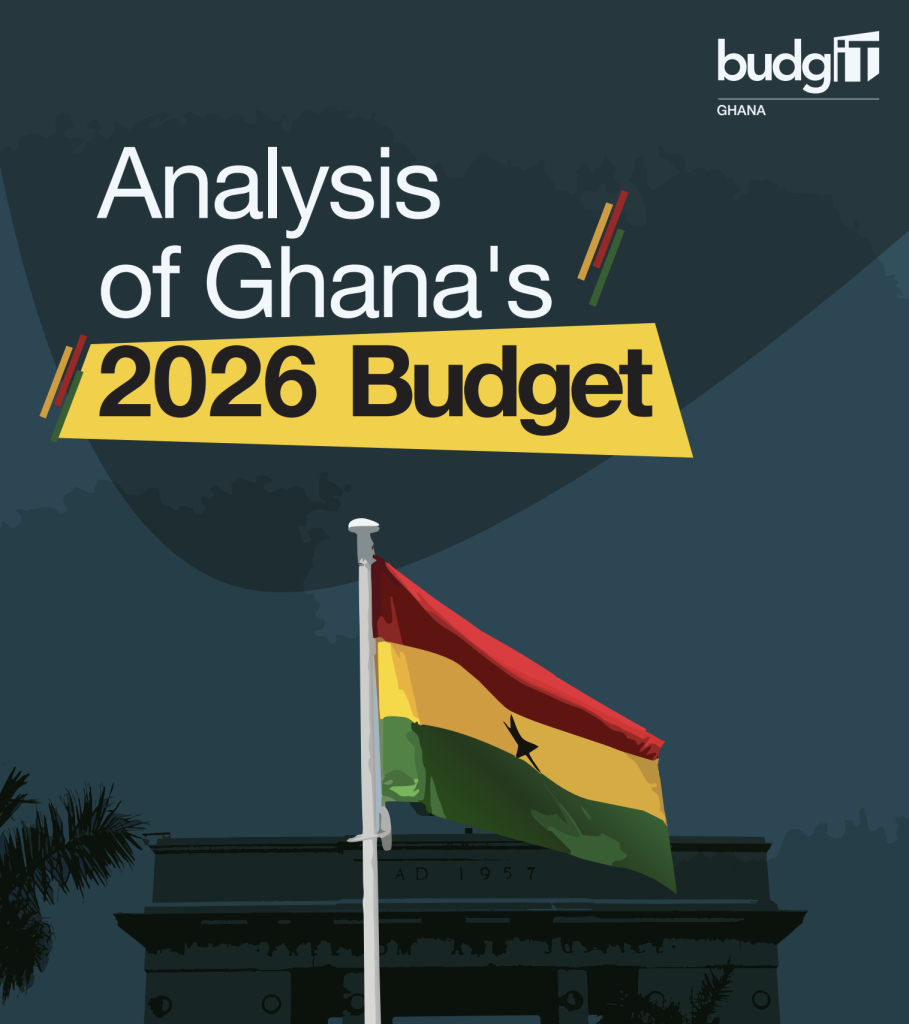
It is exciting to announce that for the first time, our Citizens Budget is available not only in English but also in Twi and Dagbani; an important step towards broadening accessibility and democratising public finance information across linguistic borders and communities in Ghana.
As Ghana navigates a critical economic journey of recovery, significant achievements and bold plans, the importance of citizen-centered conversations will only continue to grow because the big interventions, political debate, and economic forecasts, national budgets remain fundamentally about people; their realities, opportunities, pressures, livelihoods and hopes for the future, and BudgIT Ghana remains committed to staying right in the middle of that, empowering citizens and communities to get better outcomes.