
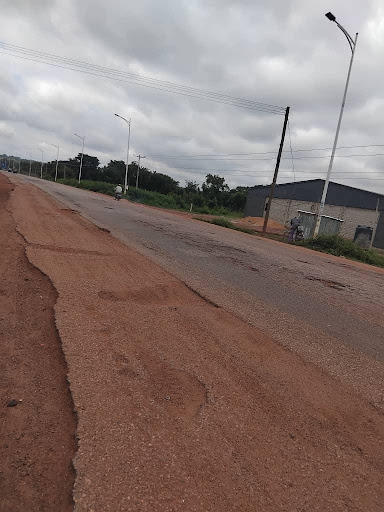
There is a stretch of road in Northern Ghana that people still talk about in the future tense. Ask anyone who uses the Tamale-Savelegu Road and they will not describe what is there, but what was supposed to be there; safe journeys, easier mobility between communities, and the vibrant business of livelihoods. The Tamale-Savelugu Road was designed to improve connectivity, trade, and mobility across Northern Ghana and neighboring countries. With a reported contract value of $158 million, the project was expected to significantly facilitate transportation and economic activities in the region. However, during a Tracka monitoring visit in March 2026, the team observed limited progress despite reports that significant funds had been disbursed. The findings raise important questions regarding project implementation, oversight, and accountability.
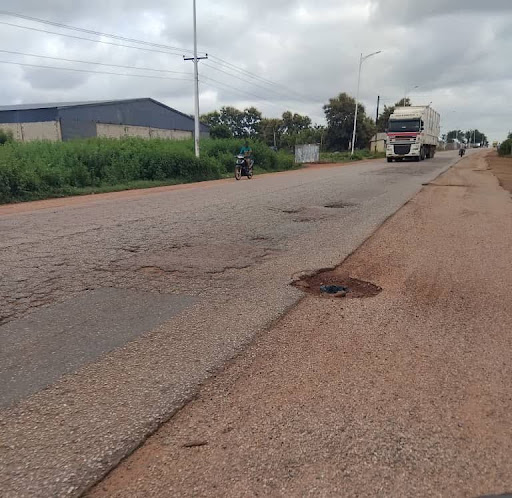
The Tamale – Savelugu road is a critical open trade route, and a stronger connection to markets beyond Ghana’s borders, like in Niger, Mali, and Burkina Faso. For a region that depends heavily on mobility for livelihoods, this road was more than just another infrastructure project, as it was meant to transform how local economies functioned. And then one day, everything stopped. The upgrading, which was to cover a 113km stretch, was awarded to JMC Projects in March 2020, with work set to begin in June 2022. Backed by a contract value of $158 million, this corridor was positioned as a critical artery linking Tamale through Savelugu to Walewale and extending to neigbouring economies. It was supposed to develop and open up the north, and make travel there less arduous and more efficient, but somewhere between intention and execution, the story took a nasty turn.
$30 Million, 1% Out. What Happened?
May-June 2022 saw $30 million, about 19% of the total contract sum disbursed for mobilisation and preliminary works. On paper and to the locals, the expectation was for work to start then; equipment moving in, workers showing up, plans being drawn and the welcome noise of business – of ongoing work, to begin. Instead, what followed after was total and complete silence; no workers, no machines, no coal tar, nothing. As of March 2026, when our Tracka team visited the site, it was discovered that only about 1% of the work had been completed. There was little to no evidence of substantial construction despite the reported disbursement of funds. Some community members expressed concerns that significant funds had been disbursed without visible progress on site.
For traders and everyday commuters and surrounding districts, delays are no longer occasional, they are an expected built-in part of the journey, and the implication is higher transport costs due to drivers having to constantly service cars because of the state of the road and the fuel costs incurred from ridiculously prolonged hours of driving. For farmers in neighbouring communities, access to markets remains precarious, whilst for locals, difficult mobility to healthcare facilities and schools is a stark reminder that development can be announced, budgeted and paid for, and yet still fail to materialise on the ground.
Beyond the Contractor; a Systemic Problem
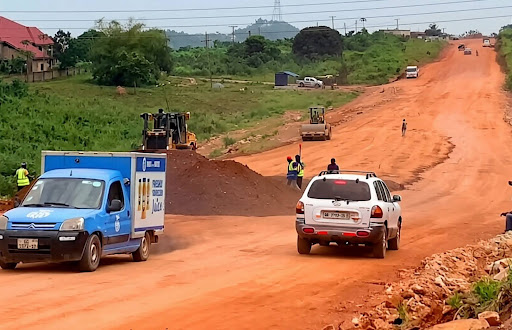
It would be very easy to reduce this story to a fraudulent contractor who collected the hard-earned money of ordinary Ghanaians and absconded to “chop” the money. In fact, it would be the most preferable to the locals of Tamale, Savelugu, Walewale, and its environs, simply because it would alienate the fault to a distant entity and position the affected communities as hostages waiting for a hero and justice, but unfortunately also because most citizens are deeply apathetic towards governance and any form of participation. However, the most critical box to look into is the systemic one; projects of this scale do not just fail in isolation; they fail because oversight and accountability mechanisms are weak or sometimes nonexistent. When disbursement is not matched with strict performance and progress timeliness, no public-facing updates on status, challenges and successes of $30 million and more is washed down the drain. $30 million should raise questions that must be answered; what monitoring systems were in place? At what point did it become clear delivery was not matching allocation? Was anyone questioned? Where are the audits? These are questions that the government, citizens, and stakeholders should be asking and should have asked.
Why This Story Matters and Must Be Told
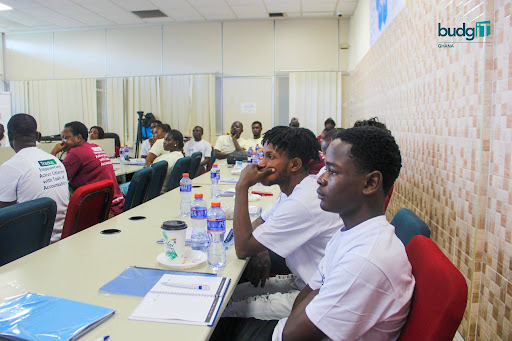
At BudgIT Ghana, our Tracka initiative exists to do exactly that – track; track public projects, their projects, fiscal trajectory and deliverability, not just because they exist on a list somewhere, but because they represent communities like Tamale, Savelugu, Nandom, Walewale etc., they represent a contract between the government and citizens; a promise that when funds are allocated and disbursed, delivery will follow, that infrastructure will not only be started but they will be completed, that communities will not be left in the vicious cycle of underservice and neglect.
The Tamale-Savelugu Road remains a critical infrastructure project for Northern Ghana. While significant public resources have reportedly been committed, observed progress raises concerns that require urgent clarification and action. Tracka will continue to monitor the project and engage stakeholders to ensure citizens receive the infrastructure they have been promised.