
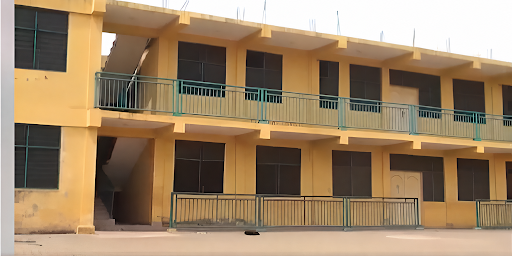
In the heart of the Mabrouk community stands a quiet building that, from the outside, looks like progress finally arrived. Its walls are complete and the pillars are firm. The structure rises confidently into the skyline as a modern two-storey facility, clean and imposing enough to suggest relief, healthcare, dignity and hope. If you drove past it quickly, you would probably assume patients were being treated inside, nurses moving briskly through corridors, mothers waiting patiently with their children in their arms, emergency cases being attended to, and prescriptions being filled. Jarringly however, the reality behind those gates tells a very different story.
The Mabrouk Polyclinic, initiated in 2019 under the Ablekuma Central Municipal Assembly and funded by the District Assemblies Common Fund (DACF), was meant to become a critical healthcare anchor for the residents and surrounding communities. With a project allocation of GH₵1,437,501.34 and over GH₵1.1 million already disbursed, this was not envisioned as a symbolic project or another commissioning opportunity to make the government look good. It was designed to solve a real and urgent problem; access to healthcare. More importantly, it was meant to ease the crushing burden on the Korle-Bu Teaching Hospital, the country’s leading medical facility, by decentralising healthcare delivery and bringing primary and emergency services closer to ordinary people. For residents who often travel long distances or endure overcrowded health facilities just to receive basic care, this polyclinic represented something deeply important; proximity, survival, and reassurance.
And yet today, despite being physically completed, the facility remains painfully non-functional; no operational equipment, no medical staff, no healthcare delivery, no patients being treated; just a completed stricture waiting for the powers that be to breathe life into it.
When Completion Does Not Mean Delivery
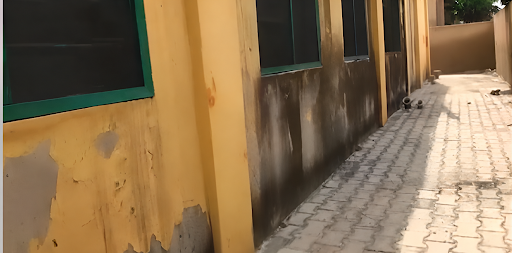
When our Tracka team visited the site on March 18, 2026, what became immediately obvious was that this was no longer just another construction story in the abandoned projects narrative. It was rather a story about the dangerous gap between infrastructure completion and actual service delivery. A hospital cannot simply heal people because concrete has been poured and paint has dried; a healthcare facility is only as useful as it is open and operational. For the residents of Mabrouk, the frustration has reached a boiling point; in December 2025, community members reportedly held public appeals and demonstrations, calling on authorities to operationalise the facility. Their message was poignant and painfully straightforward; what is the purpose of a clinic if sick people cannot receive care inside it? That question hangs over the project and the community like a dark cloud.
Across many communities in Ghana, development is often measured by visibility; buildings erected, projects commissioned, sod-cutting ceremonies, and photographed ribbon-cuttings. However, the reality is that visibility is very different from impact. A completed but unusable facility does not reduce maternal mortality; it does not shorten emergency response time, it does not help an elderly resident struggling through a hypertensive crisis at midnight, it does not comfort anxious parents carrying feverish children from one overcrowded hospital to another, and perhaps that is what makes the Mabrouk Polyclinic situation particularly heartbreaking. The community can see the solution physically standing before them every single day, yet remain locked out of the benefits it was built to provide. Hope is no longer abstract here; it has walls, windows and floors but the key for the lock is tortuously out of reach.
Beyond Construction; The Accountability Questions

This whole situation also raises uncomfortable but necessary governance questions; if over GH₵ 1.1 million has already been disbursed and the building itself executed, what exactly is delaying operationalisation? At what stage should staffing, equipment procurement and administrative activation have been integrated into the implementation plan? Was there a transition framework from construction to service deployment? Who is responsible for ensuring the facility moves beyond completion into practical use?
These questions matter because public infrastructure cannot be assessed solely by physical completion rates. True delivery must be measured by usability, accessibility and impact on citizens’ lives, otherwise communities are left celebrating empty shells while continuing to suffer the same chronic problems these projects were meant to solve.
The Mabrouk case also represents a broader national development challenge; projects are often approached as isolated construction exercises rather than holistic service ecosystems. Hospitals require more than buildings, schools require more than classrooms, water systems require more than pipelines. Effective public service delivery demands planning beyond inauguration; it requires staffing, logistics, maintenance, operational financing, and accountability mechanisms that ensure that projects work long after commissioning banners are taken down.
The Human Cost of Delay
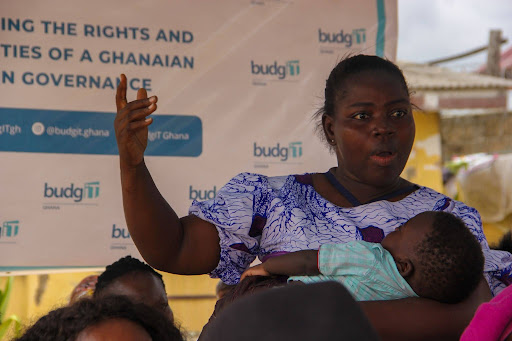
For locals of Mabrouk and surrounding communities, the delay goes beyond administrative inconvenience; it is a blight on healthcare access and overall community wellbeing. Every additional month of inactivity deepens pressure on already overburdened facilities across the district and metropolis and worsens public frustration towards governance systems that do nothing in reality for citizens.
At BudgIT Ghana, through our Tracka initiative, we believe that accountability does not end when construction stops. In many ways that is where the real question begins. Our role is not simply to document whether a project exists physically, but whether it actually serves the people it was intended for. The fact is citizens do not experience governance through project signboards or budget lines, they experience it through outcomes; through functioning clinics, through functioning schools and pipelines that actually supply water.
Mabrouk is not asking for miracles or special treatment or the unimaginable. Happily the structure already exists; the task is now for operational dignity; that the facility be equipped, staffed, and opened to serve the people whose tax Cedis made its building possible.
Until those doors open to real patients, offering real and much-needed treatment, the Mabrouk Polyclinic will join the unpleasant litany of public projects that have vivified public sector failure in Ghana, and at BudgIT Ghana, we believe that every project represents the livelihood of every citizen therefore no community, and no project should be left behind.