
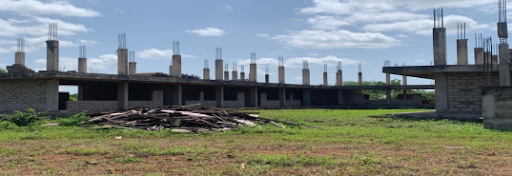
How many years should a child wait for a classroom? How many kilometres should a child travel to access something as basic and fundamental as education? And how long should a community keep waiting for a project that was meant to transform its future? We often talk about abandoned projects as though they are merely unfinished buildings. They are not. An abandoned school is not just concrete left exposed to the elements. It is a child travelling farther than they should for an education. It is a parent making impossible financial choices. It is whole towns and communities waiting for promises that never see the light of day. Nestled smack in the center of Adamsu, a quiet farming community in Jaman South Constituency of the Bono Region, is a physical embodiment of this pain. Nelson Mandela said, “Education is the most powerful weapon which you can use to change the world.”, but what happens when that weapon never reaches the hands it was meant for? A project meant to expand opportunity for young people has become a reminder of neglect, exclusion and hopelessness.
How Did the Neglect Start?
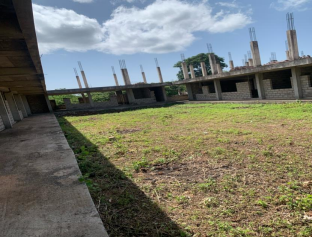
Situated within the Jaman South Constituency in the Bono Region, Adamsu is a predominantly farming community of about 100,000 people, whose primary means of livelihood has given them a healthy appreciation of hard work and perseverance. Like many rural communities across Ghana, education remains one of the most important pathways to social mobility and economic advancement for young people. When the construction of the Kwatwoma Senior High School began, it was met with excitement, anticipation and optimism. Parents saw a chance to provide their children with quality secondary education closer to home, and devoid of the cost of boarding expenses and travel costs. Traditional authorities, teachers, traders, farmers all embraced the idea of a school that would not only educate the younger generation but also contribute to the long-term development of Adamsu.
And then the problems started. The first set of contractors came to the site, work started and then they left, and another set came, the same thing happened and after multiple sets of contractors came and touched the work, the project was altogether abandoned at the lintel level. Not surprisingly, the people of Adamsu were not given any explanations on the progress or future of the project. Days, weeks, months and years later, the people finally accepted the painful truth – the project was not going to be completed. It is a sad realisation of Maya Angelou’s quote: “There is no greater agony than bearing an untold story inside you.” Mothers, fathers and the local people cannot talk about the project without painful lamentations and statements like, “We hoped it would be different, but we now understand that the government doesn’t care about us. We small communities and villages, we don’t offer much gold, bauxite or oil so they don’t pay much attention to us.” This is what apathy, resignation and disillusionment sound and look like – people losing faith in the system and feeling disconnected from the governance reality.
The Human Cost of Educational Inaccessibility
Mandela once said, “There is no keener revelation of a society’s soul than the way in which it treats its children.” The consequences of a lack of access to education extend far beyond the classroom. For young people in communities like Adamsu, secondary education can be the difference between expanded opportunities and debilitating life choices. When access becomes impossible or unaffordable, the effect ripples through the community and leaks into the development outlook and fabric of the entire country. Every additional kilometre travelled to school outside Adamsu and Jaman South represents time, resources and energy that could otherwise have been invested in learning.
Every student forced to consider or resort to dropping out because of the cost and sacrifice involved, is a lost opportunity for human development and as such, national development. Education remains one of the most powerful opportunities for reducing poverty, promoting social mobility and strengthening local economies. The abandoned school therefore is not only a painful loss but futures, potential and economies placed on hold. The global literacy crisis is more than enough of an indicator of how much nations need to prioritise and invest in the education and training of its people, if only to combat the evolving face of development and industrialisation.
What Would Completion Mean for Adamsu?
The completion of the school could significantly transform Adamsu and neighbouring communities. A fully operational senior high school would improve access to secondary education for hundreds of children, especially those from low-income households who struggle with transportation and boarding fees. Increased accessibility would contribute to higher enrolment levels and lower dropout rates among young people in the locality and beyond.
Educational institutions often serve as catalysts for broader local development. The presence of a functioning senior high school would create employment opportunities for teachers, administrative personnel, artisans, food vendors, transport operators, and other service providers. Commercial activities around the school would likely expand, creating new streams of income for residents. Demand for improved infrastructure including roads, electricity, internet connectivity, and related services would further stimulate growth and investment within the community. For Adamsu, the completion of this one project would not only deliver a school, it would help unlock a wider cycle of social and economic development.
Looking Beyond Buildings Towards Accountability
Traditional leaders and community members have repeatedly appealed for the completion of the project because they understand what is at stake. Their calls are a confirmation of the fact and belief that community mobilisation, advocacy and organised action are crucial in the fight for accountable and transformative governance. Our Tracka initiative is currently active in the community with a team of Regional and Community Champions who are helping locals, stakeholders and everyone ask the hard and right questions, because we believe that ultimately, the story here is not about concrete, roofing sheets, or even buildings, but rather about people, Ghanaians – young people seeking for opportunities they deserve and a community long overdue for some share of the development cake.
As Tracka continues its work in Adamsu and beyond, the goal is not to attack the government or merely highlight its failures and mistakes, but also to ensure that public investments actually work for the public and improve lives. Projects, initiatives, plans and schemes may look like numbers at the national level, in the big boardrooms and stakeholder roundtables, but we understand rather keenly that every number, every statistic, every initiative represents a child somewhere, a farmer somewhere, a mother needing quality and efficient healthcare and whole communities waiting to be lifted from the vale of neglect and despair. Tracka is BudgIT Ghana saying, “No community should be left behind.”, and you would agree would you not?
We are calling on the government, civil society, media and all stakeholders to come onboard in a conscious initiative to look into the Adamsu situation; to inform locals on progress and provide detailed progress reports on the Kwatwoma School project, and by extension, look more into underserved communities; to understand their needs from the lens of the communities’ own people and ensure that development moves from the policy papers at the national level to tangible, real and impactful outcomes for Ghanaians in every part of the country. We believe that development should never be centralised or focused in doses but should stretch and touch every part of our motherland.